

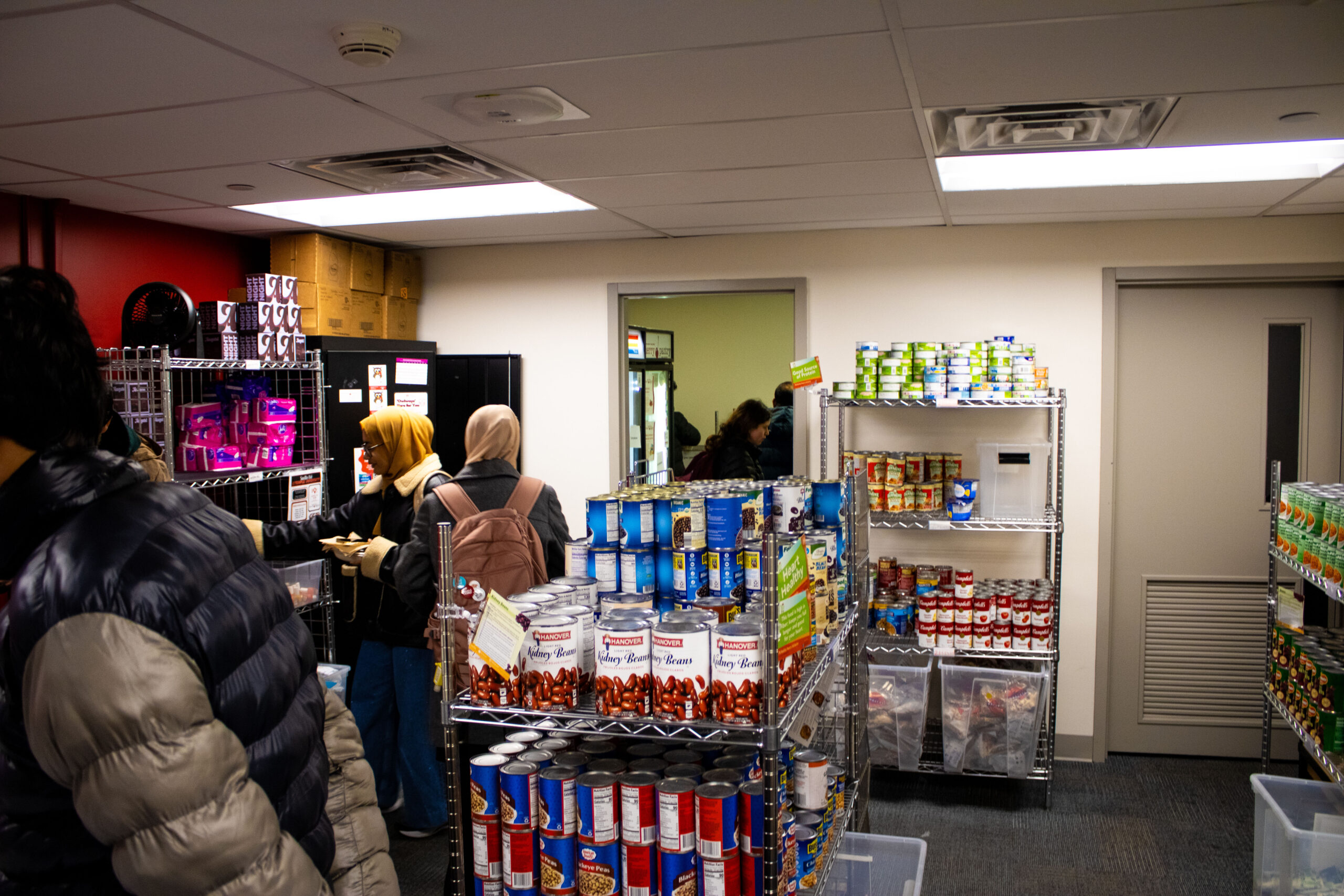
Temple University opened up the Cherry Pantry in February of 2018 to address the food insecurity needs of its student body. Many new students notice within the first few weeks of being on campus that there are very few grocery stores around campus — the exception being The Fresh Grocer located in Progress Plaza, south of the Morgan Hall dorm complex.
A study conducted by the Hope Center over the course of 2023 and 2024 found that 41% of students nationally experience food insecurity. At Temple, the Cherry Pantry has stepped up to try to bridge that gap.
The Student Affairs website states that the Cherry Pantry operates on a point system — one point for sides/snacks, two for single meals, three for multi-meal items — with a weekly limit of 16 points per student for nonperishable items. However, with the looming threat of SNAP benefit losses because of the federal government shutdown in November, the Pantry had to prepare for an expanded demand.
Annette Ditolvo is the assistant director of essential needs at the Cherry Pantry and has held the position for the last three years. She works with a team of three to estimate and predict the needs of the Temple student body, so that the Pantry can best support it.
“The needs of the Temple community are evaluated through consistent tracking of pantry usage and feedback from shoppers,” Ditolvo said. “We monitor trends in demand, assess which items students request most often, and adjust our ordering and services to better meet students’ needs.”
On Oct. 1, 2025, the federal government shut down due to Congress’ failure to pass legislation for the 2026 fiscal year. It was the longest shutdown in US history, stretching for a record breaking 43 days. November 1 is the date that loomed largest during this shutdown, as it marked when federal funding for SNAP benefits would run out — possibly affecting millions around the country and impacting Temple students through the loss of essential resources. As the Nov. 1 deadline approached, the Cherry Pantry was prepared.
“The Cherry Pantry responded to the lapse in SNAP benefits by providing additional points to our shoppers, offering meal-swipe assistance, increasing our inventory through additional food orders, and coordinating with the president’s office to ensure that these resources were widely communicated to the university at large,” Ditolvo said.
Additionally, Ditolvo said that the Cherry Pantry recognized that while its priority was Temple students, it wasn’t just the student body that was suffering. The Pantry partnered with local food bank Philabundance and a food-rescue organization, Sharing Excess, to meet the needs of the whole Philadelphia community.
“These partnerships help us secure a steady supply of resources, reduce food waste, and meet the needs of our campus community,” Ditolvo said.
The partnerships, along with the expansion of the Cherry Pantry team, have been critical to the success of the organization in meeting the ever-growing increase of students’ needs.
“To handle this, we’ve scaled nearly every aspect of our program – we have built new partnerships, moved into larger spaces, increased cold storage capacities, cultivated large-scale donors, increased our volunteer program, hired additional staff, and increased our supply,” said Ditolvo.
Even though the shutdown ended in November, and SNAP benefits were restored, the Pantry’s team is still working toward long-term goals to support Temple students. One of their biggest goals is to fully relocate the Pantry to the Essential Need hub, located on the lower level of the Student Center.
“This transition is slated to happen next academic year and will position us as the largest collegiate food pantry in the country,” Ditolvo said.
The Pantry is not only for those who are in need. Student volunteers are welcomed and are crucial to the mission of the organization: to combat student hunger and food insecurity by providing nutritious emergency food, essential hygiene items, and menstrual products with dignity and respect, ensuring no student has to choose between food and education.
The Cherry Pantry will continue to evolve to meet Temple’s needs in the future, and rise to support its students in times of crisis.