

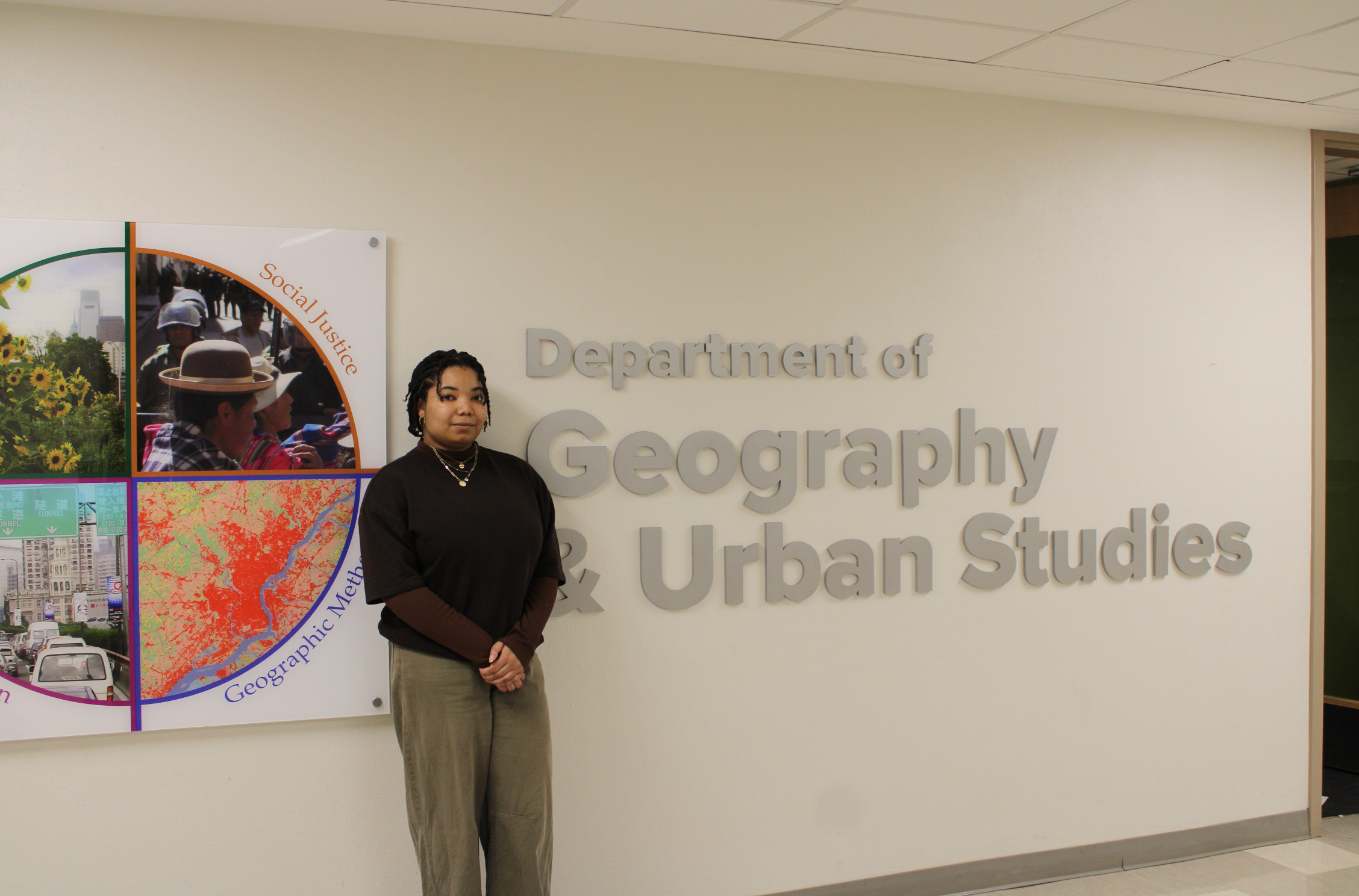
Environmental injustices impact individuals and families across the globe. The Climate Justice Field School (CJFS) selects a handful of students to be placed in various internships that help combat environmental injustices within Philadelphia. This ten-week-long program is paid and takes place over the summer as a community-engagement program. Senior environmental studies major Alisha Armstrong was one of the participants to be awarded the Climate Resilience division internship through the City of Philadelphia’s Office of Sustainability.
“I did a lot of community outreach and community engagement with my team, basically just trying to get the Eastwick neighbors involved in learning about flood prevention methods and what the city is planning to do for them, both in the short term and long term to help prevent other major flooding,” Armstrong said.
This program was created by the Department of Geography, Environment and Urban Studies to provide opportunities for students to participate in local projects relating to environmental inequalities in the Philadelphia area caused by climate change. Armstrong spent the majority of her life growing up in North Philadelphia and has carried a passion for environmental justice. That passion has only grown throughout her time in higher education and the internship experiences she has had. Witnessing real people impacted by real climate issues continues to inspire her to participate in various roles regarding climate activism.
There was a pivotal moment for Armstrong when she was interacting with a resident of Eastwick on their front porch, discussing the concerns surrounding the recent flooding in that neighborhood. The resident expressed her frustrations towards the lack of progress in addressing the flooding problem. Armstrong has been well aware of the city’s history of environmental racism in neighborhoods such as Eastwick, which are majority Black communities. Armstrong’s experience talking with this resident stuck with her during her time in Eastwick.
“I’ve seen firsthand how a neighborhood really does change and how the neighborhood works, or what investments are actually put into any kind of resources for the neighborhood,” Armstrong said. “That definitely has been a part of what has motivated me to do this kind of work. Seeing how one neighborhood can look so different, from the living conditions to the demographics of who lives there.”
One main role that Armstrong had was to put together a presentation about flood resilience kits to explain to Eastwick block captains. These block captains are representatives of various sections of Eastwick to help make decisions involving the residents’ health and safety. Armstrong showed them options of items such as water pumps, fans, and flood barriers that the block captains chose from to hand out to their neighbors.
Throughout the internship experience and her prior experiences, Armstrong noticed a similar trend among different Philadelphia neighborhoods: they all have expressed concerns of being overlooked and not having enough governmental action taken to improve the neighborhoods’ living conditions. This experience has reaffirmed Armstrong’s dedication to being an active member in providing environmental justice to communities in need in whatever way she can.
“I think programs like CJFS are so important because it provides students with the opportunity to gain practical knowledge of this industry. It really helps to connect the theory learned in the classroom to what can be done for people and communities,” Armstrong said. “Environmental advocacy programs are crucial to continue important work in sustainability and climate change activism.”