

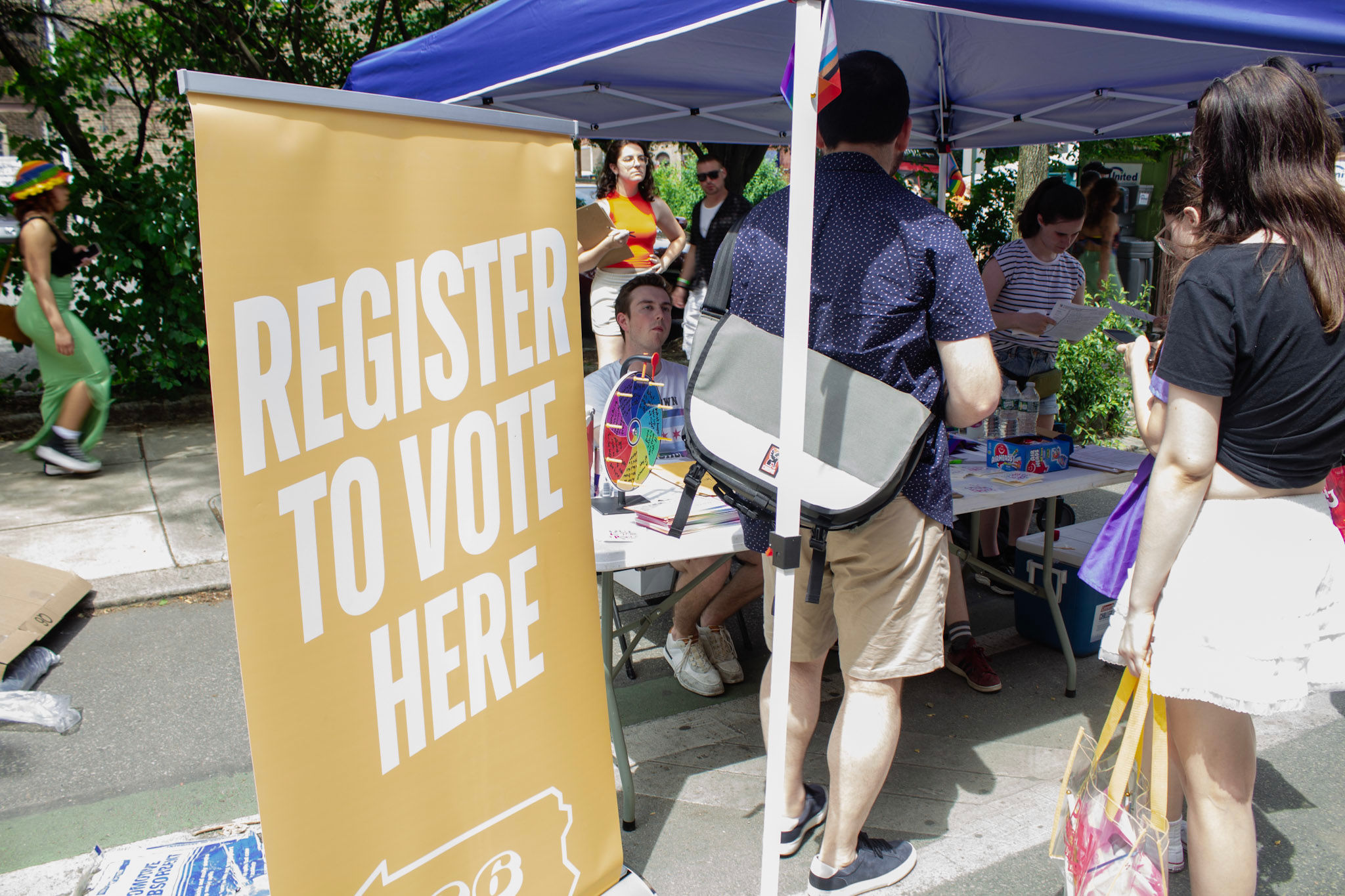
Most years, primary elections are held on the third Tuesday of April. If it’s a presidential election year, primary elections are held on the fourth Tuesday of every April. The purpose of primary elections is for Democratic and Republican voters to select the candidates they want to represent their parties during the November general election.
General elections are always held on the first Tuesday after the first Monday in November. In a general election, Pennsylvanians vote for federal, state, and local officials, leaders who significantly shape the society in which we live. So why is it difficult to get people out to vote in these elections?
Many Temple students stated that the reason they don’t always make voting their top priority is that they feel that their concerns are never prioritized.
Chinnu George, a senior political science major, brought this topic to attention and emphasized that there needs to be an emphasis on having people, especially young people, understand that their concerns can be addressed and changed if they pay attention to primary elections and the candidates involved.
“Many voters feel as though primary elections do not bring about significant change, and they would rather vote in the general election because it will provide a direct result to the city or state that they are a part of,” George said. “This common misconception hurts cities and states where every vote is crucial to who is elected to be on the ballot for the general election.”
Rates show that when there is a particularly popular candidate that appeals to the younger voters, those voters are more likely to turn up to vote in primary elections, but when there isn’t, they don’t show.
This statement is supported by research done by Circle (Center for Information and Research on Civic Learning and Engagement), where they found that one of the main reasons young people didn’t go out to vote in 2024 is because they disliked the candidates: 24% of all the youth voters did not like any of the candidates.
Not liking the candidates on the ballot is an issue that can easily be addressed by participating in the primary elections and having accessible information about the candidates and what they value, stand for, and believe.
Gary Muchironi, a retired professor from the political science department at Temple, believes that one of the biggest points to get across to students and young adults is that the primaries help choose each candidate.
“When you hear people complaining that they don’t like either Trump, Biden, Harris, or Obama, or any previous president, and you ask them, ‘Did you vote in the primaries?’, and they say ‘no’, that’s the problem,” Muchironi said. “Primaries are where each of the candidates is chosen, so you can’t wait until November to get involved.”
This lack of voter turnout is something that is not new for poll workers and city officials.
According to Ballotpedia’s Voter turnout in Pennsylvania, the rate of eligible voters turning out to vote has had a hard time surpassing the 60% threshold. In 2022, during the midterm general elections, there was a turnout of 54.4% of eligible voters in Pennsylvania, and the national average was 46.2%. During the 2024 presidential general election, there was a turnout rate of 71.4% of eligible voters in Pennsylvania, along with a 64.1% national average.
Another big problem with the lack of voter turnout, especially at colleges/universities, is the lack of time provided for students to cast their ballots.
Peyton Giordano, a senior criminal justice major with a political science minor and the chief of staff at Temple Student Government, believes that this plays a huge factor in the lack of voter turnout.
“We do not even get off for general elections, and even then, only in my political science classes have I ever been encouraged to vote, or class was cancelled,” Giordano said. “This definitely does not happen much for the primaries. My friends in other schools sometimes do not have the time to go out and vote.”
Temple University cancels classes on official holidays, with the occasional study day mixed in for students. However, when the first Tuesday of November comes around, the majority of students find themselves sitting in a classroom, wondering if they will have the time to go out and vote.
With Pennsylvania being one of the biggest swing states, and Temple University in the heart of Philadelphia, many students wonder why there is a push to go out and vote, but no allotted time to actually go out.
May 19, 2026, is the primary election, with polls opening at 7 a.m. and closing at 8 p.m. The last day to register to vote is May 4. May 12 is the last day to request a mail-in or absentee ballot, so be sure to plan out your time efficiently for every upcoming election.
“Your vote matters! Who you elect in the primaries may even matter more,” Giordano said.