

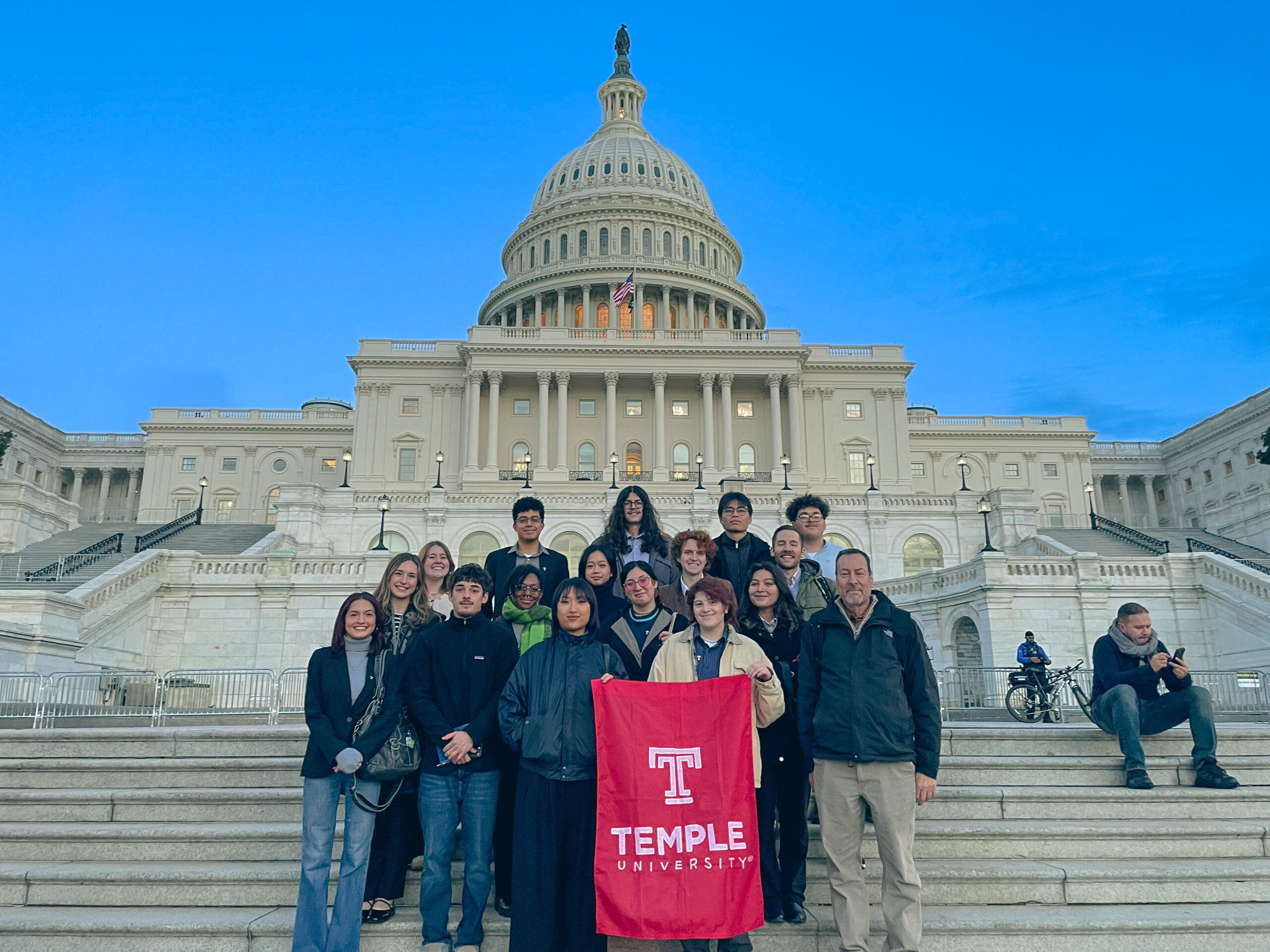
This past January, the Klein Global Opportunities department introduced a new program titled “The Foundations of Democracy: Understanding the Past to Change the Future”. The program brought students from Temple to Washington DC for a special five-day historical and political experience.
It aimed to promote the intersection of collaboration, civic engagement, and creativity through fostering discussion and providing an opportunity to learn beyond the classroom. Additionally, the program hosted a Philadelphia-based section that was made possible by a grant awarded by CampusPhilly.
Hannah Braid Sugg, the Assistant Director of Klein EDGE (engagement, development, and growth experience), worked with Assistant Director of Student Success at Klein, Tyler DeVice, to put together the grant application to Campus250 for the program.
“Having additional funds for this program really enriched the students’ experience here in Philadelphia,” Sugg said. “With the grant funding, we were able to not only buy tickets for the Museum of the American Revolution but also curate an expert-led workshop with someone from their education team.”
By Sugg’s account, DeVice was instrumental in Temple being chosen for the award.
“When I submitted our grant application, I had no idea how many other organizations were applying for funding, so we really had no idea what our chances were of receiving funding, or how much we could actually get,” DeVice said.
The program was awarded $1,500 for each student for transportation and experiences in Philadelphia.
“We promoted the heck out of this program in the fall semester, and I was so thrilled that we ended up with 19 students enrolled in our program,” said DeVice.
The ability to leave campus and visit the nation’s capital was also a critical part of the program’s success.
“Our days in D.C. were jam-packed with exclusive visits, and we found ourselves wanting even more time to dive deep into each topic,” Sugg said. “However, part of the beauty of this program was that it was contained in the early term start portion of the semester, which allowed students to participate despite their busy schedules during the regular semester.”
Both DeVice and Sugg were immensely proud of the way the cohort represented Temple.
“I wasn’t surprised by the phenomenal capability of our students, but I am always so proud of the work that they produced and the engaging questions that they posed during our professional visits,” Sugg said.
“The level of student engagement during in-class discussions and experiential learning excursions was far beyond my expectations. Our students really got into it,” echoed DeVice.
The program hopes to continue to promote civic engagement among its participants, encouraging empowerment and learning in the future that will help them build a better Philadelphia through interactive, outside-of-the-classroom programming.